Author Archives: Barry Kelly

Barry Kelly's avatar

About Barry Kelly

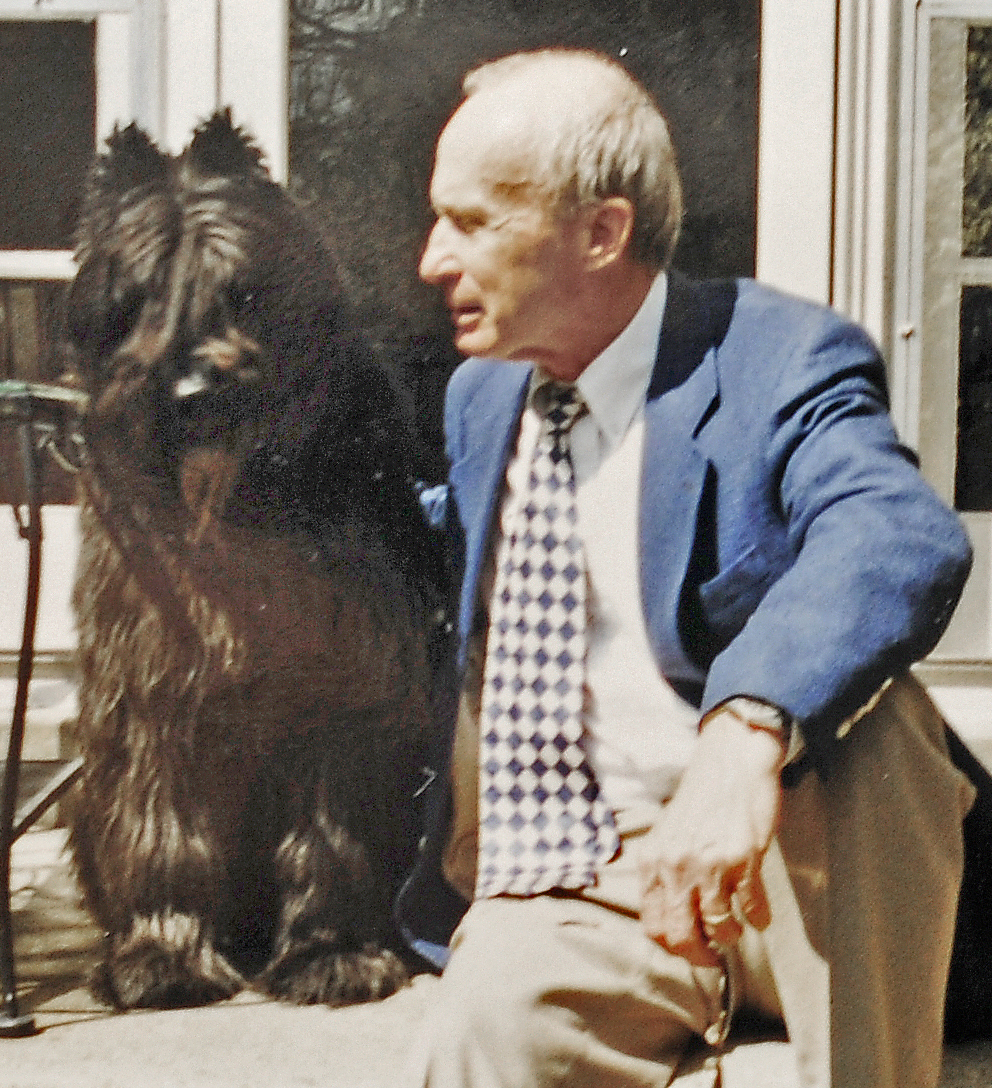
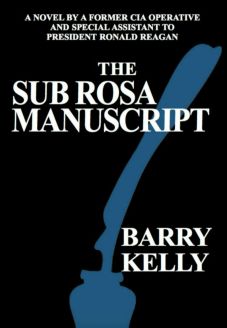
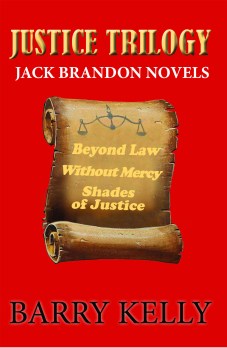
Author of "Justice Beyond Law," "Justice Without Mercy," "Shades of Justice," "Justice Without Mercy," and "Run to Freedom," as well as two ,"nonfiction books ,"INSIGHTS-The Transforming of America," and "INSIGHTS-Stepping Stones to Tyranny. He also is the author of the blog "8 Decades of Insights." Barry Kelly is no stranger to the world of espionage, counter-terrorism, weapons, deep cover, and the inner workings of the governmental security apparatus. His immersion in the Cold War began with enlistment in the U.S. Navy during the Korean War. Following his discharge, he earned a BA from the University of Pittsburgh and a master’s degree from Duke. His career in the CIA included deep cover operations and overseas experience, primarily in South and Southeast Asia. He has been awarded the Certificate of Merit with Distinction, the Intelligence Medal of Merit, the Cross of Gallantry with Silver Star, the Distinguished Intelligence Medal and the Intelligence Officer of the Year Award. After retiring from the CIA, Kelly served as a special assistant to President Reagan. He holds a first dan black belt in hap-ki-do. Visit www.factsandfictions.com or find the author on Facebook.

The Professor’s op-ed on the Middle East and the U.S.

In between honors classes one day, the Professor thought, “I just can’t stand it any longer. No one is telling the people the truth about the Middle East. Does the Obama Administration and the Clinton campaign think we are too dumb? Trump’s instincts are good, but he needs to bone up on the area. The Russians are not in the Middle East to fight ISIS and Putin is not about to make any deals that do not further his plan to hold a naval base on the Mediterranean and to be a major on the ground player in the oil patch. I just have to write an op-ed piece.”

He pulled his keyboard toward him, looked out over the bay, and began to write.

First, there are a couple of truths about our strategic past in the Middle East. Forget the lines and names drawn on maps of the Middle East. Think of the area divided between the Sunni Muslims and the Shia Muslims with the nation of Israel maintaining a stronghold in the midst of the struggle for dominance by the Shia and Sunnis. The Iranians are the leaders of the Shias and the Saudis, Arabs of the Gulf States and Egypt leading the Sunni opposition.

ISIS, al-Qaeda and their splinter groups are Sunni. The Obama-Clinton group has thrown American support to the Iranians, who want to use their new power to dominate the Middle East. President Obama always intended to follow the Shia/Iranian lead. That is why the abrupt pullout of U.S. troops from Iraq as soon as Obama came to power. The Iranians wanted the U.S. forces out of Iraq so that the Iraqi Shia could assume full control over the Iraqi military and economy and oust Sunnis from the military and government. (Remember, the Iraqi led Sunni government under Saddam Hussein fought a very bloody war against the Iranians.)

The Iraqi Shia government is now firmly allied with Iran. This is a government in name only. Iranians control all major moves in their drive to control a Shia empire of what is now Iraq, Syria, and Lebanon. ISIS with all the terrible atrocities they have committed represented Sunni opposition to Iranian strategic goals. When they are destroyed, the strongest power on the ground will be Iran. When Mosel falls, it will be with the heavy involvement of Iranian weapons and ground forces. The Turks will stay within their territory and the only other viable fighting force, the Kurds, will be isolated with dreams of their own homeland shattered. With all of the talk from Washington about arming the Kurds, we never did. The Iranians and the Turks do not want the Kurds to be armed with modern weapons. All the arms we said were being sent to the Kurds went through the Baghdad Shia government that never sent them onward. The Obama Administration, of course, knew the Kurds would never receive the weapons. There is literally nothing the Iranians want that the Obama/Clinton group will not do their best to supply. Just look at the recent deal Obama made with Iran on their nuclear weapons program. While not called a treaty, that was what this deal is. Why take that route? Simply a way to avoid the need for Congressional ratification. We, the people, and Congress still have not seen all the pieces of this executive action.

On the Russian side, Putin is a modern day czar of Russia. His goal is to re-establish as much of the old Soviet Empire as possible. The weakness of the Obama presidency has given him a grand opening. For many centuries, Russian czars dreamed and planned to acquire a warm-water port for their navy. Without firing a shot or endangering Russian soldiers, he has acquired Tartus in Syria as a Russian warm-water port. That is now a fact. The fleet is there and weapons to defend it are in place. Putin will do what he must to support Assad. He is not in Syria to fight ISIS. Aleppo is the only evidence anyone should need. ISIS was not there but Syrian anti-Assad forces were. The city is now rubble as a result of Russian historic lack of concern for collateral deaths when their critical national interests are involved. Since Iran is the local protector and supporter of Assad and Syria, Putin will make any deal necessary with Iran to protect his naval base at Tartus and his new role in Middle Eastern oil. Obama’s plan for Iranian hegemony in the Middle East is on solid ground with both U.S. and Russia supporting Iran and the Shia Muslims.

Leave a comment

Filed under Afghanistan, Clinton, foreign policy, Intelligence & Politics, Iran, ISIS, Israel, Kurds, Middle East, Obama, Politics, Putin, Shiite, Sunni

The Professor and Political Realities


conference-1330110_1280“Before I give you a short lecture on what I call ‘political realities,’ here is your assignment for our next class. Now that you are divided into two groups, each supporting either the conservative side or liberal side, each group must prepare a ten-minute speech and a TV ad. The group’s representative will deliver the speech. Visual aids are allowed, but it is the effectiveness of the message that counts.

“We have political parties because people want, or believe they want, something different from what they have now, while others want to defend and develop the existing way of governing. When you view politics for this perspective, you can identify basic issues and beliefs. I haven’t found many people to agree with my analysis, but I believe it to be accurate. You, of course, may disagree, but you must be able to defend your group’s position.

“I believe the drive toward centralization of nearly everything is rooted in the DNA of civilization. The motive of this need to seek centralization would probably be a good thing, if the process had some limit. But it does not. It continues until centralization reaches the breaking point where constant centralization creates an unmanageable entity. The need to have or, at least, to believe the process has created a controllable management structure where a small group of elites can create a better life for all by reaching the point where management is responsible to the will of the people sounds like a very desirable outcome.

“Unfortunately, it is not. The Department of Homeland Security is a good example. After the terrorist attack on 9/11, in a laudable intent to secure future safety by improving management accountability and effectiveness, several organizations that were already too big for effective management were combined. However, I think only the priests of centralization believe the head of DHS can or is improving security. The more likely result is that most of his time and energy are expended in trying to find out what is going on in his empire and how to satisfy the requirements of the president and Congress. Nevertheless, now that one person is in charge, the pushers of centralization believe improvements in security will routinely occur even with the almost weekly examples of bumbling by the managers of airport security. From the time of unwritten history, the Roman Empire’s rise and fall, to the present day, the process of centralization continues, modified only by the undeniable failure of a society, civilization, or a national government. This process can be found behind the constant failure of socialist nations.

“Behind the scenes battle the ‘founders and the guardians.’ This theme is easier to explain because it can be observed in both the public and private sector. The keywords are founders and guardians. Organizations in the beginning of their histories can point to the people who were the founders. With maturation, nearly all organizations slowly, but inexorably, move into the control of the guardians. These well-meaning, good people use the power of process to protect and perpetuate the organization they inherited. Process expertise does not involve the understanding or the furtherance of the founder’s mission, it is solely concerned with the way the mission is accomplished. You have all seen them. They are the enablers of the units who focus on personnel management, accounting, logistics, communications, and finance. Good people all and their skills are needed and respected.

But they should not supplant the line mission leaders. The downside is the effect of their process requirements on the effectiveness and direction of the line mission of the unit. Seldom can a person with process skills actually lead people engaged in the primary mission of the organization they serve. Yet this process affects all organizations, private and public.

My third theme is the most important. The Constitution, the Bill of Rights, our founders, the separations of powers, and the blood and sweat of our ancestors all combine to make America a very special place. All of these elements rest on the ‘rule of law.’ When an administration like President Obama’s disregards the rule of law, they are trashing the very core of America’s existence.

The rule of law doesn’t provide total equality for all people. Slogans spouting sound bytes such as “a fair shot for everyone,” “equal opportunity for all,” and “everyone deserves a fair share” are the false promises that permeate socialist speeches. The rule of law does, however, provide equal protection under the law from the arbitrary excesses of government and the protection of life and property by the government. This protection must be provided equally to all citizens, all the time, regardless of wealth, economic stature, race, religion, or political position. Justice must be blind in its application to all. When it is not, our society will begin to unravel, for the rule of law is what holds our nation together. It is what finally triumphed over evils like slavery, racial and religious discrimination, and inequality of opportunity to be all you can be. This is unique to America. It did not arrive here with our waves of immigrants. Instead, it is what brought them to take the risks of moving to a new land.

“Ponder these three themes. Use them or develop your own. But you must be able to identify what is behind the sound bytes of our political parties. Class is over. See you all next week.”

Leave a comment

Filed under Barry Kelly, centralization, complexity, Conservative views, Intelligence & Politics, management theory, political solutions, Republicans, trump

The Professor and The Debate

_DSC3194 copy 


The first Presidential debate of 2016 had just finished and the spin rooms were already active with talking heads. Professor Clark shut off the wide-screen TV that dominated his home office. He said, “It is a pleasure to have this class in my home for this historic debate. There is no question that this is the most important election period in my lifetime. There are serious issues at stake. Many have been postponed for years. The very direction of the nation is being decided. The kind of world you will live in for the rest of your lives is being debated now throughout the nation. To verge on the sensational for a moment, I don’t think it is a stretch to say the very existence of this unique nation could be a casualty of the election.

“I know it is late and the sleep time hard-working students get is precious, but I want to go around the room and get some one-liners from you. Alison, let’s start with you.”

Alison said, “Secretary Clinton stayed on message and showed very good debate discipline, but I don’t think she scored many points. Her poll numbers will remain relatively constant.”

“Robert, you’re next.”

“It’s hard to pick a clear winner. Trump missed several opportunities to score but he did as well as he needed to. The moderator was clearly helping Hillary and that will resonate with his followers.”

“Carlos, what’s your take?”

“I agree with Alison and Robert. The debate was a draw or close to it. Secretary Clinton had the worst hand, having to run on the direction Obama put this nation on when the people are screaming for change.”

“Katrisha, comments?”

“I saw the debate nearly the same as my colleagues, but was struck by the body language. Hillary was ‘smirky,’ stiff and her voice was too high-pitched. Trump showed anger and some petulance. He couldn’t get over his ‘counter-punching’ instincts. As a result, he let his opponent direct the substance of the debate.”

The Professor nodded at Paul and said, “Go.”

“I thought at a presidential debate even a moderator from NBC would play it fairly straight. It could have been worse, but his frequent interruptions of Trump, the selective fact checking and the avoiding of any questions on e-mails, illegal servers, BenGhazi, the Clinton Foundation and many others showed a clear network biases.”

“Barbara you’re on.”

“I was struck by the fact the contestants seemed to be unconsciously addressing different audiences. Hillary’s comments, I believe, were directed to the wonks and the Washington establishment. Trump seemed to be ignoring that audience and speaking to the people outside the handpicked inside audience. His pitch should have resonated with mainstream America. Especially the working people and those who are having difficult times just feeding and housing their families.”

“Edward, comment?”

“Yes. Irrespective of the judgments coming out of the spin rooms, the wonks and talking heads have been wrong about nearly everything associated with this campaign. And they have been wrong because they dislike the Republican candidate deep in their core. Trump is not of them, he doesn’t look like them. He doesn’t share their beliefs and perhaps worst of all, he is not an ideologically pure right-wing conservative Republican. The Conservative establishment class, including those in Congress and the feckless national security crowd, are giving, at best, very tepid support to the Trump campaign. The entire Bush crowd is an example of these political correct Brahmans.”

“Not exactly a one-liner but then the one-liners have been growing with each speaker. Alice, it is up to you to wrap this up.’

“I’ve enjoyed the comments and have to admit some of them surprised me. Indicating that while we all witnessed the debate, we saw different things. This is not a traditional presidential campaign. Maybe this is closer to a revolution than an election. Maybe, just maybe, in most countries these issues would now be being fought in the streets.”

“Excellent comments. This is a remarkable class. Go get some sleep and we will pick up these threads in our next class. Thank you.”


Leave a comment

Filed under Barry Kelly, Capitalism, Clinton, Conservative views, democrats, Intelligence & Politics, Obama, political solutions, Presidential Debate, Republicans, trump

The Professor: Who Is Your Commander-in-Chief?

barrykellyProfessor Mike Clark waited until his honors class had all taken a seat at the conference table. It amused him to see, that with few exceptions, they had taken the seats they had taken at the first class. The room got quiet as he entered and stood at the head of the table.

“Good morning. I assume you are all prepared so I’ll call on the first speaker. Who is supporting Secretary Clinton as our next Commander-in-Chief?”

Several hands raised, and he said, “Okay, Alice, the floor is yours.”

Alice stood and looked around the table and began her ten minutes of reasoning. “I don’t know about the rest of you, but I can’t imagine electing anyone to sit in the White House who hasn’t had some years of military or civilian command experience in the ranks of Government. Nothing the President does is as important as keeping our citizens and the nation safe from foreign threats. Premier Putin is acting as if he were a Russian Czar in the eighteenth century. China is expanding and consolidating both its internal territory and its aggressive development of control of the South China Sea. Who can believe that dredging up the sea bed to create military strong points in the South China Sea and challenge the claims of its neighbors to the economic wealth of undersea oil deposits and the traditional right of all nations to the use of international sea lanes is for anything but Chinese domination of the area?

“What better preparation is there for anyone seeking to be President than the experience gained from years as Secretary of State? Secretary Clinton has traveled extensively throughout the world and personally knows nearly all the world’s leaders. She has studied the Middle East and understands the complexities of the competing powers and the cultural and religious dynamics of this volatile area. The Secretary was a key designer of our new relationship with Iran. This was a very complex undertaking that will provide peace and security to the region and, indeed, to the rest of the world. You shouldn’t minimize her tenure as a Senator representing perhaps our most important state. How else could a candidate understand from their first day in office the actual working relationship of the Congress and the White House?

“Her experience is unique due to her close understanding of the interrelationship of the White House, the Defense Department, the Department of State, and the various intelligence players. She knows the people who make up the government’s national security force. What other Presidential candidate has ever had her depth of experience and knowledge? I vote for Secretary Hillary Clinton to be our next Commander-in-Chief.”

Alice sat down amid some applause. Professor Clark said, “Thank you,” and asked for show of hands of those who wanted to explain why they chose Donald Trump to be their next CINC. Looking over the several raised hands he said, “Edward, you have the floor.”

Edward smiled and stood behind his chair. He opened by saying, “We have had several effective and ineffective Presidents who came from many different backgrounds. I don’t think their backgrounds mattered much in their governing. In fact, in some cases, their backgrounds, although they seemed very desirable for filling the chair of Commander-in-Chief, were actually a handicap. There is no previous background that prepares anyone for the role. Instead it is the intangibles of leadership, character, vision, discipline, intelligence, judgment, people skills, ego, and toughness – physical and mental – that enable a candidate to be a good Commander-in-Chief.

“Donald Trump has many of those attributes in his makeup. He has used all of them to acquire immense wealth from a business empire he personally developed and managed. He had to be a good judge of the potential of subordinates, have an understanding of the power of maintaining morale, maintain a consistent effort on a broad front of competing areas for attention and resources, an ability to learn from mistakes, and as the gambler said, ‘Know when to hold them and when to fold them.’ That characteristic is necessary in today’s world of shifting alliances.

“Donald Trump has those qualities and he does not have a rigid ideology that drives his actions. If it furthers the mission and deserves the resources required, then the activity is good and should be continued as long as the mission remains desirable and resources are available. The Commander-in-Chief must be his own man. He cannot be owned or directed by others for their own gain. Donald Trump doesn’t need more wealth. People too often keep doing what they know how to do even when taking on new and different tasks. Mr. Trump doesn’t have that debilitating fault. He will not be limited by his past experience. He will be a truly pragmatic Commander-in-Chief. Thank you.”

“Alice and Edward, thank you both for a good opening. I want both of you to divide the others into two groups, one for Clinton and one for Trump. Alice and Edward will lead their respective supporters, at least until the next class gets started. If anyone else believes they have something to say that is pertinent, you will have to convince your two current leaders to give you the time. You may spend the rest of our class time preparing for the next meeting.”


1 Comment

Filed under Barry Kelly, Intelligence & Politics

The Professor: Class Begins

Setting: Picture a 5,000-student liberal arts college on the Eastern Coast. It has a strong political science program and attracts students from all over the United States and a few other nations. Professor Mike Clark is the head of the Political Science Department and teaches a twice-weekly meeting of select political science honor students.

Professor Clark came out of an active retirement two years ago after the college offered him the opportunity to teach without the burden and distraction of administrative chores and attending functions. His ground rules before accepting the job stated he would be given no curriculum or college goals to meet and that he would have a number two who would handle the day-to-day operations of the department. He made it clear that his intent would be to help his students learn to think, and current events — whatever they are — would provide topics for discussion.

Seventy-five percent of the graduates who took his courses after his first two years back landed top jobs at successful law firms and Fortune 500 companies. The college was happy, the students were excited, the Political Science Department was over scribed, and the parents of his students wrote glowing letters with checks to match to the school.

As another year got ready to begin, Professor Clark was pleased with the eight students he had selected to take his political science honors course. There were no published pre-requisites for his course, nor could students just sign up to take it. He personally selected the participants from a stack of 25 files three young assistant professors sent to his desk. Students he selected were sent an invitation to enroll, and his invitations had never been declined.

This would be his first meeting with his new class of honor students.

The students filed in and selected seats at the polished cherry wood oval table near the palladium window looking out over the Bay. The room was not large and a normal speaking voice could be clearly heard. Professor Clark waited until the room had settled and said, “Good morning. Welcome. Some of the ground rules here are different from those you have learned in the past or that might be in place in some of your other classes. Here, you will be expected to play the role of several different officials, both domestic and foreign. To do that, you must keep up with current events, without me giving you a formal assignment. There is no room in this class for neutrality. One of Russia’s Cold War Premiers, Nikita Khrushchev, said that while nations might be neutral, there are no neutral men. You must be able to explain and defend the position you take on any issue.In the presentation of your positions, you must not degrade the value and integrity of your word. Once your peers lose trust in your word, it may never be regained.

“Grading will be simple. You either pass or you don’t. There will be no repeat courses or extra credit. I will pass out a general reading list. It is far from a complete list. You must understand the Constitution and how it was developed, the impact that slavery has had and still has our nation, and the doctrine of the separation of powers. There will be no tests on what you have read. The extent of your reading is up to you.

“You must have noticed all our classes are schedule as the last period before lunch. That is so we can run over the normal class period when we need more time. You can eat anytime.

“We are in the midst of a very important national election. The future of our nation will be changed by the result, maybe beyond return. I cannot imagine a better forum to bring political science alive than a class during this critical period in our nation’s history. The subject for Thursday’s class will be the role of the President as Commander-in-Chief and which candidate you support and why? You each will have ten minutes to defend your position. You will spend the rest of today’s class reading and studying global current events so that you are not only knowledgeable about what interests you and molds your opinions, but what also interests others and is shaping their opinions. You must know both sides of an argument to debate it well.”


Leave a comment

Filed under Conservative views, Intelligence & Politics, political solutions, Politics, Progressives, Republicans