FOREIGN POLICY?

The President had just entered the Advisor’s underground office. It was a surprise visit. The Advisor was alerted that the President was on his way down to the tunnel between the White House and the Treasury Department. The Advisor’s office was off an unused and restricted branch off the main tunnel. Access to the Advisor and the secret location was now controlled by the Secret Service. The existence of the Advisor and his location was the best-kept secret in the nation.
The President took his customary seat at the small conference table and said, “I need to clear my thinking about Syria and foreign policy in general. I don’t really like your advice but it does help me think through through problems.”
“Mr. President, my mission is to help you. If my advice helps your thinking about problems, that’s good. What specifically do you want to cover tonight?”
“A few weeks ago you asked me what I meant by the phrase, ‘Transform America.’ Telling you my thoughts re transformation clarified my thinking. Today I want to talk about my vision of America in the world.”
“I’m the smallest audience a President ever had for such a topic. I am honored. Please, your audience is ready.”
“People say I came to the White House with very little experience. To some extent that is true. My actual experience with managing huge organizations or in leadership roles is nonexistent. But I bring other skills no other President had. I was a practicing Muslim when I was very young. It is a very different religion from Christianity or any other world religion. More is expected from the believer. Free thinking is discouraged. There was no reformation in Islam. The individual, the family, and the Nation are all one. Islamic law is the law. Religion and country are not separate. I am no longer a Muslim but I know what they feel and think. I doubt if any previous President could make that statement.
“My father was not an American. He was a true Kenyan nationalist, as was his family. They did not sit around and hope things would change. They worked and struggled for change. To me change is part of the result of hope and struggle. I understand the process. I was also exposed to collectivist theology when I was very young.
“To me the sacrifice of individualism or the freedom of the individual must give way to the greater good of collectivism. You may think that this is a strange way to explain my foreign policy objectives. But it isn’t. In place of the individual put a single nation state. Now what is different? The freedom of a single nation must give way to the collectivist’s better world. America has dominated the world since World War II. The only change is that America became more powerful and wealthy while the rest of the world fell far behind. When I came to power the United States was the only super power.
“I believe that is wrong. It is wrong for an individual or a group of individuals to control wealth and power in a single country just as it is wrong for one nation to control more than its fair share of the world’s resources and power.
“My foreign policy plan is to gradually spread America’s wealth to other nations and to slowly weaken the power of the United States military to dominate the world. I do not want America to become energy self-sufficient.
“There will be no pipeline bringing oil from Canada to our refineries. Canada does need more wealth. The Muslim world does. If they cannot sell their oil, they will be lost. Buying oil from OPEC, borrowing money from China, climate control and Cap and Trade, pushing our manufacturing to other countries, keeping taxes high – all these policies are spreading America’s wealth. Domestically my goal is to destroy the ability of families to accumulate great wealth. Very high death taxes are the way to do that. But back to foreign policy.
“When we become a more humanitarian, less wealthy nation and reduce our stockpile of conventional and nuclear weapons, other nations will be more willing to join with us to better the entire population of the world. In theory the same process and theory used to spread the wealth among the American population, can be used to spread America’s wealth throughout the world. One world, one people, one God is not an idle dream. I know I can’t achieve all this in three more years but a series of Progressive Presidents, and Congresses can. I have always known I was a citizen of the world. What do you think?”
“Mr. President, if that is your dream, it doesn’t matter what I think.”
“No. I need to hear your comments.”
“You must know that what you have described is not new. It is an Utopian plan that has been tried in both small- scale models within the United States and in countries such as, Russia, China, Germany, Cuba, Eastern Europe, a few nations in Africa, and England. When people see the Utopia they sacrificed for, they haven’t liked what they saw. The problem is Collectivism requires management by an elite, chosen by whatever process. The management challenge presented by collectivization is too great for any elite structure.
All elites in history who have had total control over the economy, the people, the courts, police, and military have succumbed to corruption. The term power elite describes the problem. Mr. President, look at your own Administration. It is an elitist structure. Where is the transparency you promised? You are an elitist yourself. You know what is good for the people better than they do. ‘They will not be able to understand Ben Ghazi. So why tell them?’ All the unprecedented incursions of individual freedoms by Executive decree, the disdain you have shown for the Constitution and the courts. Your unwillingness to work with the Congress.
“I see I’ve struck a nerve. I am not trying to insult you, but I am trying to cause you to rethink collectivism as a goal, domestically and internationally. You may have some immediate successes but I fear failure will be your final result with great damage to the America you were elected to guide.”
“I thought you, as an old black man, would understand what I’m trying to do.”
“Someday, I’ll tell you my story. Thank you, Mr. President for being so honest with me. I do have your best interests as my mission.”
The President finished his coffee, stabbed out his cigarette and let himself out.
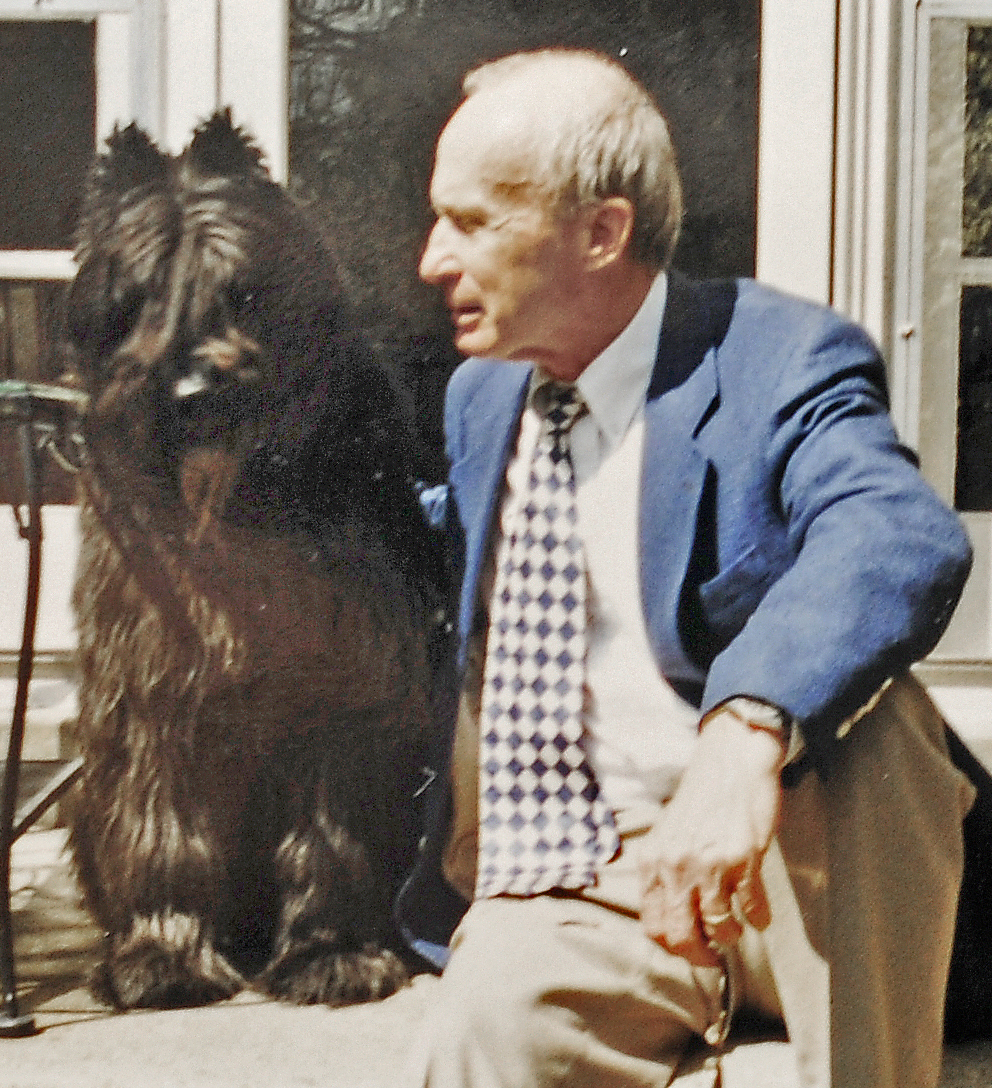
The author has 27 years of Government service, including two years serving President Ronald Reagan in the 1980s as an

advisor. Considering today’s volatile political situation, you are encouraged to share this on Facebook and to click the “like” button below. Comments and dialogue are welcome.
Related Articles
- Obama’s foreign policy just as bad or worse than Bush’s – poll (fromthetrenchesworldreport.com)
- Our President from Another Planet (americanthinker.com)
- A New Moral Low (statelymcdanielmanor.wordpress.com)
- Eight Decades of Insights – Advisor 74 (factsandfictions.com)






 Barry Kelly | Facts and Fictions