Category Archives: political solutions

INSIGHTS FROM EIGHT DECADES #7

Small is good. Big is bad. At least that is what we hear in our political debate. I much prefer small government, but small government can also be inefficient, politically motivated and corrupt. Even when government is made smaller, it can still be integrated and centralized beyond the management skill of humans. In my previous blog, I discussed the ‘centralization’ process and its profound effect on efficiency.Today,I want to develop the theme further without getting into mind numbing detail and too many words.

The key words are founders and guardians. Organizations in the beginning of their history can point to the people who were the founders. With maturation, nearly all organizations slowly, but inexorably, move into the control of the guardians. These well meaning good people use the power of process to protect and perpetuate the organization they inherited. Process expertise does not involve the understanding or the furtherance of the founder’s mission, it is solely concerned with the way the mission is accomplished. You have all seen them. They are the enablers of the units who focus on personnel management, accounting, logistics, communications and finance. Good people all and their skills are needed and respected. They should not supplant the line mission leaders. The downside is the effect of their process requirements on the effectiveness and direction of the line mission of the unit. Seldom can a person with process skills actually lead people engaged in the primary mission of the organization they serve.

A few organizations have a built in correction factor that eventually keeps them in the control of people who understand how the mission is accomplished. There are people who are natural warriors who deeply understand the mission and how it must be accomplished. These natural warriors don’t often survive the growing process and procedures of a few decades of peace. We have never gone to war successfully with the leadership of our military that is in power after a long period of peace. After a period of disasters and tentative fumbling, the leadership is replaced with military leaders who can fight a war. Look back at all our conflicts and you will easily note the changes. The Civil War being one that clearly shows the search for military leadership.

Other non military organizations have a somewhat different means to keep the people from the front edge of their respective mission in leadership roles. They have an ingrained system of metrics that clearly indicate success and failure. For example, the world of sports, entertainment, engineering and medicine do not long tolerate poor performance. They have a way to reinvigorate themselves, usually by constantly upgrading the team or unit with the best people they can find. Professional and college sports teams are a good example. Points scored, yards gained, rebounds, track times, winning coach records all make a clear metric for us all to follow. Imagine professional football coaching ranks having a number of coaches who never played, coached or even followed the game. What impact would that have on the players and fans? Imagine how the men and women of some of our leading agencies respond to their bosses who never walked in their shoes and could not do so now. They barely understand the problems and methods of the organization.

Political is not above these concerns. As in any other field, people can master the language and process of campaigning for office or career without having any substantive skills or experience. In general, I greatly prefer Governors, Generals and CEOs, rather than Legislators, as presidential candidates. Leaders and managers cannot learn their skills without experience encompassing failures as well as successes.

Comments welcome.

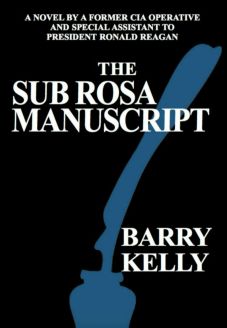
Incidentally I’m easing back into my Storyteller role. My second novel is now in the hands of the editors. I hope to publish it by May of this year.

Leave a comment

Filed under Intelligence & Politics, political solutions, Politics

INSIGHTS FROM EIGHT DECADES #6

CENTRALIZATION

President George W. Bush signs the Homeland Se...

President George W. Bush signs the Homeland Security Appropriations Act of 2004 on October 1, 2003. (Photo credit: Wikipedia)

Does every civilization contain the seeds of its destruction? Maybe the historians are right when they publish learned tomes describing trends and signals of certain decline in  highly organized cultures. Conservatives sometimes claim when the ‘takers’ out number and out vote the ‘givers’ the end is coming. Maybe, maybe not. Another signal I’ve recently heard is fascination or obsession with spectator sports or games is a sure sign we’re sledding downhill. Again, maybe. I don’t find either of those or a number of others, persuasive.

My own worry is the embedded drive in humans to continue the process of centralization. Defined as combining segments of government, business or religion into fewer and fewer segments where fewer and fewer people make decisions. This process expands the scope of control beyond the ability of anyone to be an effective manager and steward of public funds. It is all part of the desire to make things better. Watch, when things go ‘wrong’ the cry is, put someone in charge. Make someone responsible. 9/11 gave us that opportunity. Something was wrong. How else could such blow strike our homeland? A conservative government, under President Bush, moved to fix the problem. By, of course, putting pieces of government together under a central  control. To start with the pieces of government in their separateness, were not well managed. Many of them were already too large.

Today Homeland Security, is an example of centralizing management until you reach numbing inefficiency. Another example is the DNI organization. The Director of National Intelligence is about the worst fix anyone could have made to improve the collection, analysis and dissemination of intelligence. I defy anyone to prove money is being saved or that the product produced has been improved. Top managers of such over centralized organizations don’t have a clue to what is happening in the trenches. Their main concern is often getting enough reporting from the far reaches of their commands to make them look credible, especially when briefing the President or appearing before an aggressive group of journalists or legislators.

Unfortunately both our main political parties are vulnerable to the drive to fix things by centralization. National Health Care or Obamacare, Dodd Frank, over reaches of OPA and the Department of Energy are examples of good intentions leading to disastrous unforeseen consequences.

While some centralization is necessary, decentralization is the sure path to renewed growth and vitality in both business and government. Good people in charge of manageable organizations can fix problems. Over centralization cannot.

by the author of the Jack Brandon thriller series         http://www.factsandfictions.com

4 Comments

Filed under complexity, Conservative views, Eight Decades of Insights, Intelligence & Politics, management theory, political solutions, Politics, Terrorism

INSIGHTS FROM EIGHT DECADES #4

A do nothing Congress. A Grid lock approach to problem solving. An increasing use of class warfare slogans. Where is all this going? Surely this is not the American Promise. What happened to the ‘Land of Opportunity’, ‘The Melting Pot‘, ‘One Republic for All’, ‘The Great Democracy’, and many more hopeful descriptions of the United States of America? Are they being dissolved in the rhetoric of ‘Class Warfare’ and ideological purity? Reading the newspapers, listening to the political speeches from the left and right and the news coverage of the  network and cable news TV you would think so. Even the President never fails to bring issues of class warfare to the front as he campaigns incessantly. Presidential candidates are examined under the microscope of political purity rather than the question can this person lead us out of our current doldrums of economic stagnation and political ineptness.

Divisions in our political parties have grown sharper. Movement of the Republicans to the right and of the Democrats to the left has dramatically decreased the possibility of the conflicting parties reaching compromise solutions on nearly all of our critical problems. The political center is under represented, in practical terms, maybe non-existent. Describing this situation as national suicide in the name of partisan purity is becoming more correct with each legislative impasse.

Since class warfare is the oldest and most prominent divisive force in terms of human civilization, with the possible exception of tribalism, which includes many of the same motives, let’s start our move toward an escape from political fratricide with a look at the motives of class warfare.  The basic motive in class warfare is for one segment of the population that represent the ‘have nots’ to take away some the privileges and wealth of the other group representing the ‘haves’ until everyone has an equal share. This ideology has always worked from the premise that the amount of wealth in any society  is fixed. To give the ‘have nots’ more, wealth must be taken from the ‘haves’. The followers of the class warfare theory have  always rejected the opposing premise that wealth is expandable and a greater share for the ‘have nots’ can come from created wealth.  This sharing of wealth premise depends on equal opportunity for each individual to have a chance of improving their relative position in their society. Leveling the playing field does not mean there will not be winners and losers. It means everyone has a chance for a bigger share of the community’s wealth. The level of success each individual achieves depends on ability, hard work, and a degree of luck.

To move away from the dangers of a national class warfare struggle, we must all help change the metrics of the debate. Reject the slogans and sound bites of one class against another, including the rantings that the ‘middle class’ must be the recipient of all things. Recognize that there is an inequality of performance in striving for material gain and that in the field of life, as in the field of sports there are winners and those who lose. Reassert that  wealth and material holdings are only one measure of success among many. Search for areas of agreement in solving problems and settling disputes. Work on personal tolerance of other viewpoints. Constantly work for improving the field of equal opportunity, understanding there will always be different levels of success.

Leave a comment

Filed under Books, class warfare, Intelligence & Politics, political solutions